
Government design teams have operated under a simple, frustrating rule for years: security first, creativity second. The tools available to federal designers have consistently trailed what the private sector uses by half a decade or more. That gap costs real time, real money, and, most importantly, real trust from the people these services are supposed to help.
That's changing. Figma earned FedRAMP Moderate certification in March 2025, and in December, Figma Make landed inside Figma for Government. Together, these two milestones represent a shift in how public sector teams can design, test, and ship digital experiences. Not eventually. Right now.
Why FedRAMP Moderate Matters More Than You Think
FedRAMP (Federal Risk and Authorization Management Program) Moderate authorization is the federal government's stamp of approval for handling sensitive but unclassified data. Getting it is not easy. Figma had to meet rigorous security and privacy standards across its entire platform, including Figma Design, FigJam, and Dev Mode.
But here's why this matters beyond the compliance checkbox: it unlocks real collaboration.
Before this certification, government design teams were stuck emailing PDFs, managing local file versions, and hoping everyone was looking at the same iteration. FigJam, Figma's digital whiteboard, was off limits. Dev Mode, which bridges the gap between design files and engineering handoff, wasn't an option. Multiplayer editing in a shared, secure workspace? Not happening.
Now, over 100 government agencies and contractors are working inside Figma for Government. Designers, developers, product managers, and stakeholders can open the same file, leave feedback in context, and move work forward without the back-and-forth that used to eat entire sprints.
One source of truth. No more "which version is this?" conversations.
The Work Is Already Happening
This isn't theoretical. Federal teams have been building real things.
The National Park Service used Figma to develop an app that serves all 431 national parks and monuments. A small team adapted Massimo Vignelli's iconic design system for digital, creating a unified experience across a wildly diverse set of locations and use cases.
Amtrak streamlined its internal systems for over 20,000 employees and 28 million annual passengers, consolidating workflows from brainstorm to finished product inside a single platform.
The online passport renewal system, launched in 2024, transformed a process that hadn't changed in decades. By 2025, more than two million people had renewed their passports online. 97% reported a positive experience. 80% said it increased their trust in government.
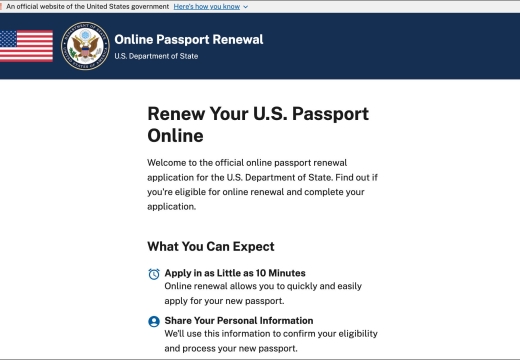
These are not edge cases. Teams across the U.S. State Department, IRS, and USCIS are using the platform for everything from taxpayer services to citizenship case management. The pattern is consistent: when designers and developers share the same workspace, the output gets better and the timeline gets shorter.
Figma Make: From Static Mocks to Working Prototypes
If FedRAMP Moderate was the green light, Figma Make is the accelerator.
Make is Figma's prompt-to-code tool. It lets teams turn ideas into interactive prototypes in hours instead of the weeks it typically takes to produce, review, and revise static mockups. For government teams, where stakeholder alignment involves policy leads, IT, engineers, and program managers, this changes the conversation entirely.
Instead of presenting a flat screenshot in a meeting and asking people to imagine how a portal might work, you can hand them something they can click through. A working prototype answers questions that a PDF never will. It surfaces usability issues early. It gives policymakers something tangible to react to, which reduces the risk of expensive late-stage pivots.
There's an accessibility angle here, too. A recent Executive Order reinforced the importance of usability, accessibility, and design consistency across citizen-facing services. Faster prototyping means teams can run accessibility testing earlier in the process, not as a final checkbox before launch. Citizens can be brought into feedback loops sooner, shaping the product while it's still flexible enough to change.
Make works within Figma's existing authorized environment. It integrates with shared libraries, design systems, and team workflows. There's no additional setup, no separate tool to learn.
What This Means for Managing a Design Team
From a design leadership perspective, these tools solve problems that go beyond project timelines.
Talent matters. Good designers want to use good tools. Asking a senior UX designer to work in outdated software is a fast way to lose them to the private sector. Figma for Government gives agencies access to the same platform used by the best product teams in tech. That's a real recruiting advantage.
Consistency scales. The official U.S. Web Design System (USWDS) design kit is available inside Figma with 42 components built using variables and smart layouts. When every team pulls from the same kit, the output starts to feel like "one government," not a patchwork of disconnected portals.
Cost goes down when quality goes up. Prototyping and testing in a collaborative environment means fewer surprises during development. Fewer surprises mean fewer rework cycles. Fewer rework cycles mean the budget goes further. That math holds up on every project.
Looking Ahead
Figma has committed to reaching full FedRAMP Moderate compliance across all of its cloud infrastructure in 2026. Make is already fully usable inside the authorized environment today, and additional products like Figma Slides are on the way.
The momentum is there. More than 100 agencies are already in the platform. The design system infrastructure is built. The security bar has been met. What remains is for more teams to step in and start building.
If your agency is still trading static files over email, or if your design team is waiting weeks for feedback on mockups that could be interactive prototypes, this is worth a serious look. The tools are ready. The authorization is in place. The question is whether your team is going to use them.
Figma for Government is available now. Learn more from the Figma team about getting started.
At Tactis, we help federal agencies modernize digital services, from UX strategy and design systems to full-scale platform implementation. If you're exploring how tools like Figma fit into your modernization roadmap, we're happy to talk through it. Reach out anytime.